





Digitalization and AI
As a global materials manufacturer, Covestro leverages digital technologies throughout the entire value chain: in research and development, in production facilities, in supply chains, and at interfaces with customers and markets. This digital foundation creates new opportunities for data-driven innovation and sustainable industrial value creation.

Strategic driver for Covestro
Digital transformation is a central component of the “Sustainable Future” corporate strategy. Digital technologies help to combine sustainable growth with climate neutrality and a circular economy.
Covestro is driving digital transformation through a comprehensive program – across business functions and along the entire value chain. Digital solutions help to manage production processes more efficiently, systematically leverage data, and improve decision-making processes. At the same time, they lay the foundation for new applications that increase efficiency, transparency, and the pace of innovation.




Digital technologies across the value chain
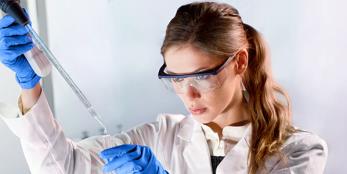
Digital production systems and data-driven analytics help Covestro make production processes more efficient, safer, and more sustainable. They also enable more targeted use of energy. This benefits collaboration with customers and partners as well. Digital platforms, connected supply chains, and data-driven analytics ensure that information is available more quickly and that processes can be better coordinated. Digital methods are also becoming increasingly important in research and development. Simulations, for example, support the development of new materials and the optimization of production processes.
The digital transformation affects not only technologies but also working methods and skills. Whether in production, in collaboration with partners, or in research and development: digital technologies can only realize their full potential if employees understand them and can use them effectively. Covestro therefore supports the development of these skills through training programs, hands-on projects, and digital tools. This enables processes to be designed more efficiently, collaboration to be improved, and innovative solutions to be developed.

Digitalization in Manufacturing
Production at Covestro’s German sites in particular demonstrates how digital applications and data-driven analytics support plant operations. They help make processes more efficient, safer, and more sustainable. The following examples provide insights into specific applications at Covestro.
Mobile maintenance in Krefeld-Uerdingen
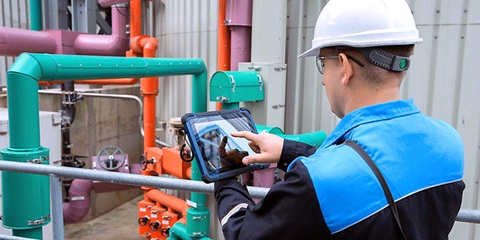
For many years, Covestro has been collecting and analyzing production data. As part of its digitalization strategy, the company has now reached its next milestone and further advanced the digitalization of its operations. This primarily affects the areas of plant planning, operations, and maintenance. The use of digital tools is being tested, among other places, at the Krefeld-Uerdingen site. There, Covestro is further expanding “Mobile Maintenance” – that is, plant maintenance using mobile devices.

This step will enable the company not only to streamline work processes at the site but also to further harmonize operations across its production facilities. This saves both time and money, as tasks that previously had to be recorded by hand can now be handled digitally. Following a successful pilot phase, the new process will now be gradually rolled out to Covestro’s other sites in Leverkusen and Dormagen.

Intelligently controlling chlorine production
Chlorine production at the sites in North Rhine-Westphalia requires large amounts of electricity. Using computer-aided fine-tuning—also known as “numerical optimization”—production in Leverkusen is flexibly adjusted to the availability of renewable energy. Intelligent algorithms synchronize the energy-intensive chlorine production with electricity from wind and solar power plants.
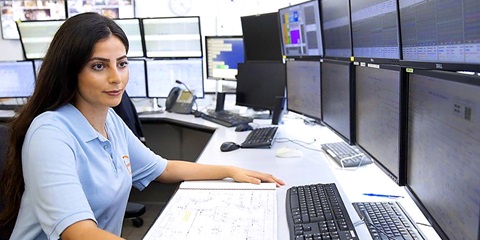
Simply put: When a lot of electricity from renewable sources is available on the market and there is sufficient production capacity, electrolysis is automatically ramped up. When supply is tight, output is reduced accordingly, provided this can be done without affecting production volumes. The system “thinks” like experienced shift supervisors—only faster, around the clock, and based on hundreds of variables simultaneously. Employees in the control room can thus continue to focus on the safe operation of the plants.

In the future, the use of precise mathematical analyses in chlorine production is also to be expanded at the other sites in North Rhine-Westphalia to further increase the use of renewable energy. At three sites in North Rhine-Westphalia, Covestro produces approximately 850,000 tons of chlorine annually, as well as the co-products caustic soda and hydrogen. Digital measurement systems are already continuously recording key process parameters from more than 7,500 electrolysis cells, thereby laying the foundation for precise control of the plants.
Inspection of facilities using drones
At Covestro’s production facilities, drones and robots are used to inspect tanks and equipment. This makes inspections of plant components safer, faster, and more efficient. In the past, inspection engineers sometimes had to climb into the plant components themselves. This required numerous protective measures and safety devices to minimize the risk to the engineer as much as possible. Today, specialized drones and robots equipped with high-resolution cameras and a variety of other sensors perform this work. They operate without the need for scaffolding, aerial work platforms, or other costly measures.

Drones and robots offer a wide range of benefits: They eliminate safety risks for employees, enable fast and precise inspections, and significantly reduce both time and costs. At the same time, they provide detailed data that allows for the early detection of corrosion, cracks, or other damage. This enables targeted planning of maintenance measures, helps avoid unplanned downtime, and significantly increases plant availability.

Artificial intelligence for innovation and efficiency
Covestro’s digital infrastructure forms the foundation for artificial intelligence (AI) applications. It enables the rapid analysis of large volumes of data, automates processes, and accelerates innovation. In this context, human expertise and AI work closely together—a central pillar of the “Sustainable Future” corporate strategy.
AI expands human capabilities and opens up new possibilities in terms of capacity, speed, and complexity. As a “digital colleague,” it supports employees in processing information, making data-driven decisions, and handling repetitive tasks. This frees up time for more challenging activities while making processes more efficient, safer, and more sustainable.

AI applications at Covestro
At its German sites, Covestro is increasingly connecting data, knowledge, and decision-making through digital means. This is giving rise to AI-powered solutions for production, sales, research, and administration that optimize processes across all departments.
A clear framework applies here: data protection, security, and compliance form the foundation of every AI application. At the same time, Covestro strengthens its employees’ skills through practical training programs so that AI can be used responsibly and effectively in everyday work. The following examples illustrate how AI is specifically used at Covestro’s German sites.
Fully automated production line in the polyester plant
One example of how Covestro uses artificial intelligence is its polyester plant (DSD) in Dormagen. Since mid-2024, one of the production lines there has been operating fully autonomously. The AI handles all process steps – from order acceptance and detailed production planning to the execution of formulas and logistics management.
The project was based on the analysis of large amounts of data, which was used in conjunction with machine learning to reduce production times and thereby increase the yield of the production lines in operation. The project combines state-of-the-art digital tools with decades of process expertise.

The result: Production output increases significantly, while product quality is further improved through even more consistent batches. Insights gained from analyzing millions of data points make it possible to increase the operation’s resource efficiency by reducing energy and material consumption.
Machine learning improves plant reliability
At its Krefeld-Uerdingen site, Covestro is demonstrating how machine learning is taking plant availability to a new level. At the heart of the process is what is known as anomaly detection. This involves analyzing large amounts of data to identify deviations in operating parameters at an early stage.

This makes it possible, for example, to identify emerging maintenance needs or potential defects in system components in advance – long before they could lead to a system failure. As a result, unplanned downtime can be significantly reduced, and system availability – and thus production output – can be substantially increased.
Covestro Virtual Assistant: AI as a Daily Companion in the Workplace
With the Covestro Virtual Assistant, Covestro launched a powerful virtual assistant for all employees in 2024 – specifically tailored to the needs of a global chemical company.
The Covestro Virtual Assistant simplifies day-to-day work in a variety of ways: It can generate text, images, and charts; retrieve information in real time from the web and internal knowledge sources; and interact with existing IT systems, such as Outlook. In addition, it can be flexibly adapted to individual work styles and processes. Employees can configure their own assistants – without any programming knowledge – to support them and their teams with specific tasks.
In addition, AI-powered virtual assistants are available – from IT support and -HR to procurement and research and development. Through regular updates, these virtual colleagues are continuously improved.